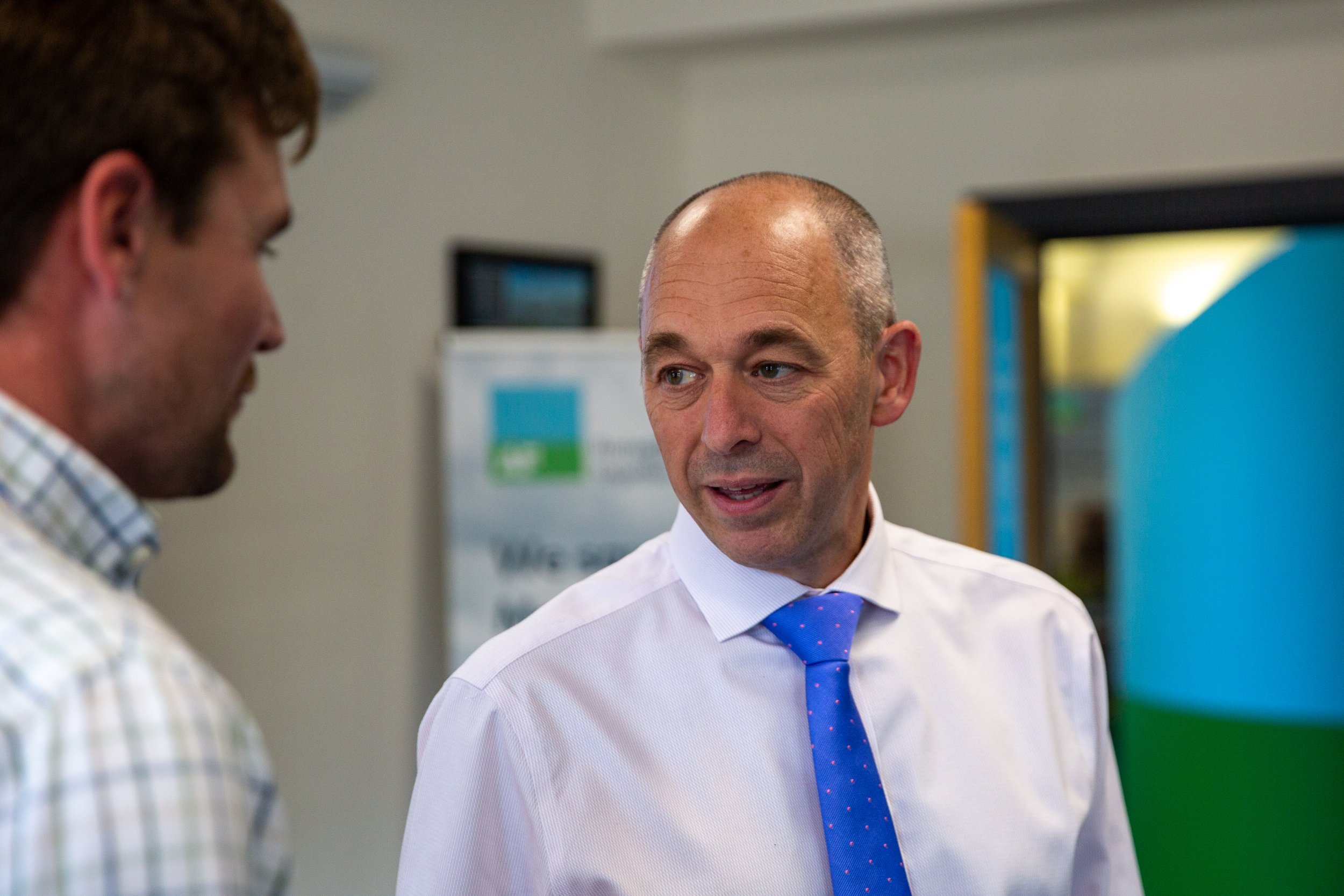
“We’re a truly vertically integrated business. To sell fresh fruit to retailers, and supply our factory making Wilkins jams and conserves, we grow fruit on three sites in Essex. I’m Chris Newenham and my role with Tiptree Farms is managing director, but I joined 24 years ago as farm manager. Historically, we had three significant constraints on growth: soil, water and labour. Plus we had the issue of huge increase in our energy costs.”
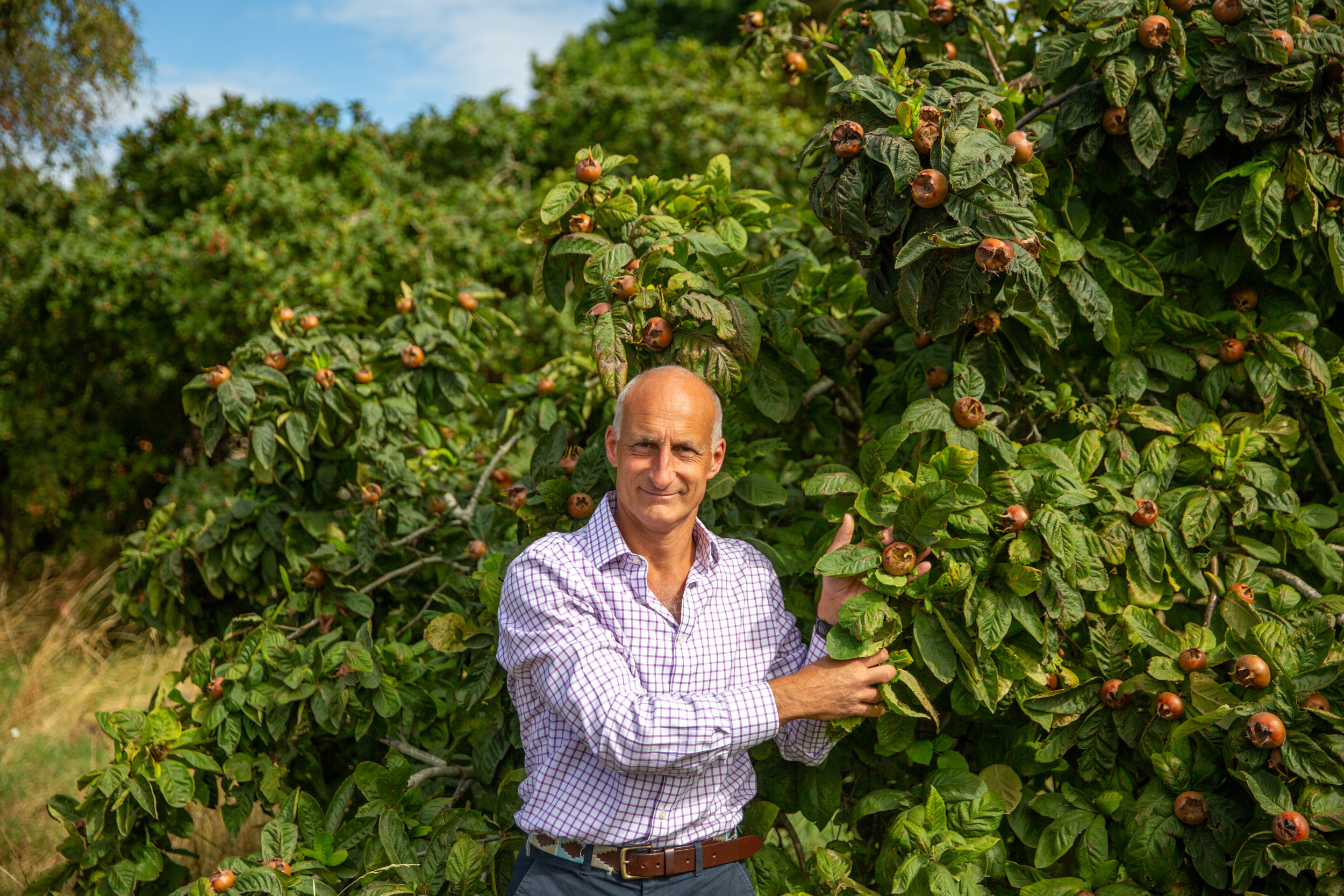
“Last year was magical for fruit, yields up 10-15%. Our season starts in April with rhubarb (a vegetable of course, not a fruit!). Then we carry on with strawberries, very specifically Little Scarlet which is unique to us, then raspberries, plums, damsons and greengages; mulberries in September, quince in October and medlar in mid-November after a few frosts.”
“We’ve got over the soil issue for strawberries by growing on table-tops in coir. Spent coir gets composted and spread back on our fields, it’s good for us to get organic matter back into the soil.
“We’re farming in the driest part of the driest county! We have no groundwater abstraction available to us, so everything is about capturing, reusing, recycling water and then ultra efficiency of use as well. We built a couple of very substantial new reservoirs in the last 7-8 years.
“We harvest water off our polytunnels into French drains. We recycle water from the factory. For water security we were fine in 2025. Everything depends on recharge of our reservoirs this winter. That’s what went wrong in 1976. It was dry in ‘75, they didn’t get the recharge in winter’ 75 and then hit the buffers in ‘76.
“Labour is a constant source of stress for us. We’re vulnerable to the winds of government and what they’re going to do with the short term seasonal agricultural workers’ scheme. “Alongside locals our workforce is from a variety of the ‘stans’ and then Bulgarians and Romanians.
“Our latest innovation is to supply much of the energy needs for our factory from our solar farm. Energy has been crippling for us starting from the war in Ukraine. The annual cost of our combined gas and electric went from £800,000 to £4.5 Million! It has been absolutely brutal and hence the motivation for our solar because we can never be held to ransom like that again.
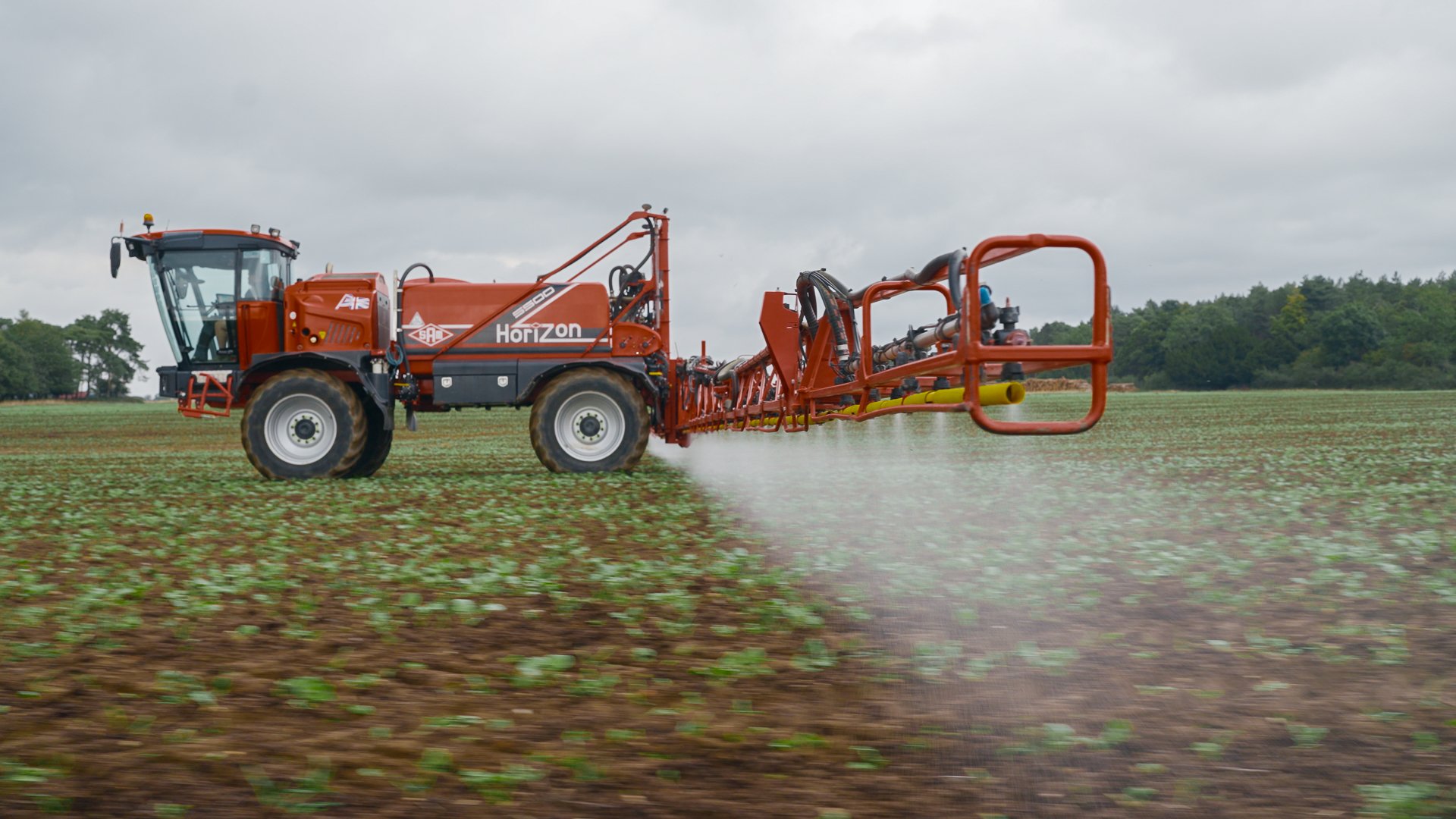
“We’re working hard to reduce all inputs. The nature of our growing system is such that we’re not using herbicides anymore. We are, barring catastrophe, insecticide-free thanks to lots of biological controls. In the last three seasons, I think we’ve only had to revert to insecticides on one or two occasions.
“The next challenge is reducing fungicides for controlling mildew and botrytis in the polytunnel crop. That’s something we’ve been working hard on for three years with robotic company called Antobot. We have a fleet of half a dozen self-propelled robots that go around the crop several nights a week scanning for signs of fungal infection and using ultraviolet light instead of intervening with fungicides. It’s not a panacea yet, but promising.”
 The polytunnel crops
“I feel a level of comfort in terms of our water security that I never had before.
“Hence the confidence to invest in more strawberry polytunnels.
“In a normal rainfall year, we’ll be about 90% self-sufficient in water used.
“And for our energy, we have more resilience than we ever have.
“We’ve put in as many solar panels as will produce enough electricity at peak summer to power our factory. In winter it will probably supply 30% of what it needs.”
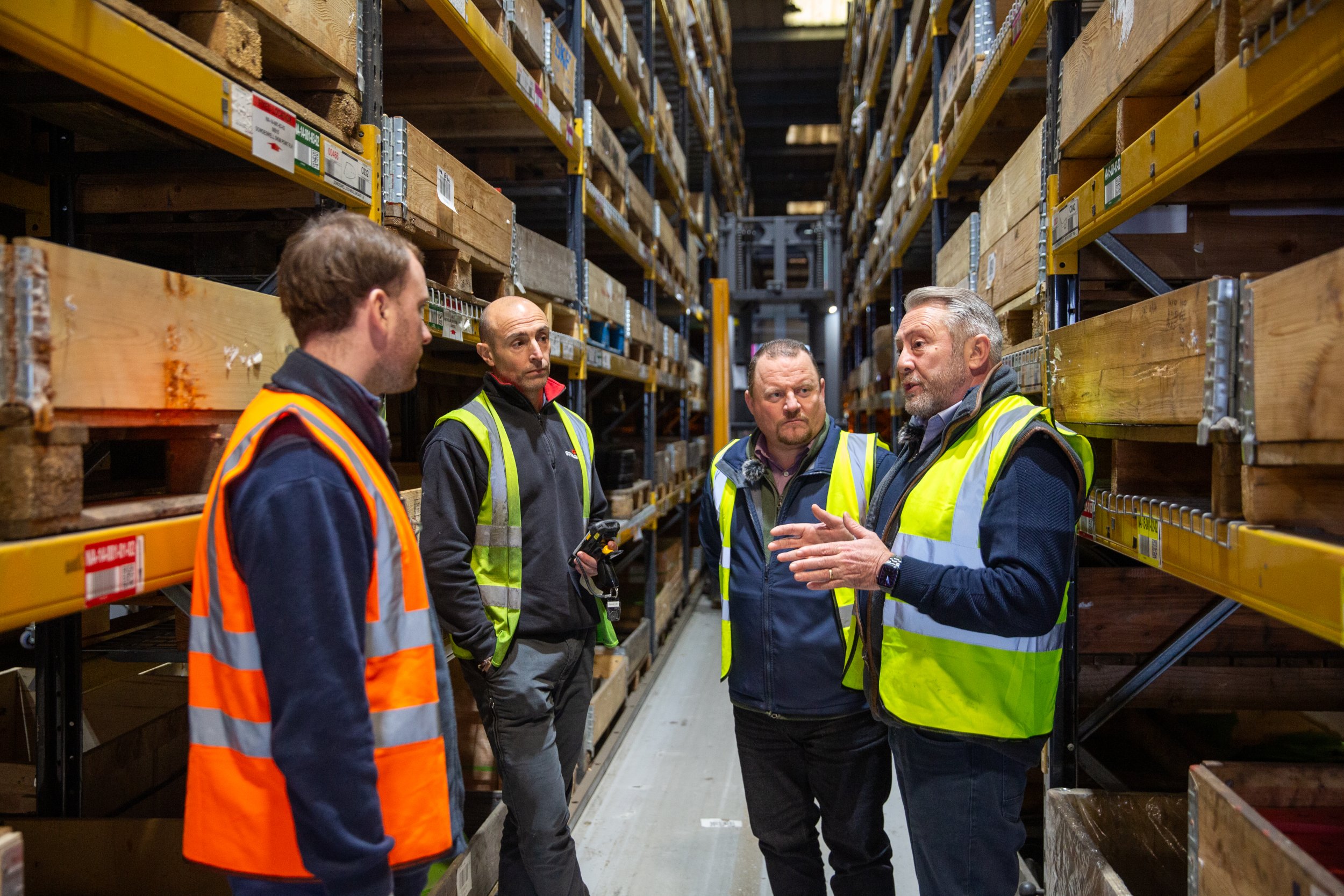
“We’ve been with AF since 2011. The primary products that we are contracting with them on are ag chems and fuel for all our vehicle fleet and also for homes.
“I would say the main benefits are cost and convenience, the one-stop-shop approach. Occasionally we sense check how AF are doing for us and the fact that we’ve stuck with them for the last 15 years speaks for itself.”
“More solar, if we can get a licence to export. Maybe battery storage too.
“You are the very first people that we’ve shown our new 4-hectare block of strawberry polytunnels. It’s a thing of beauty, isn’t it?”
Visit www.tiptree.com to learn more and shop online.
Ready to find out how much AF could save your farming or rural business? Use our Savings Calculator.