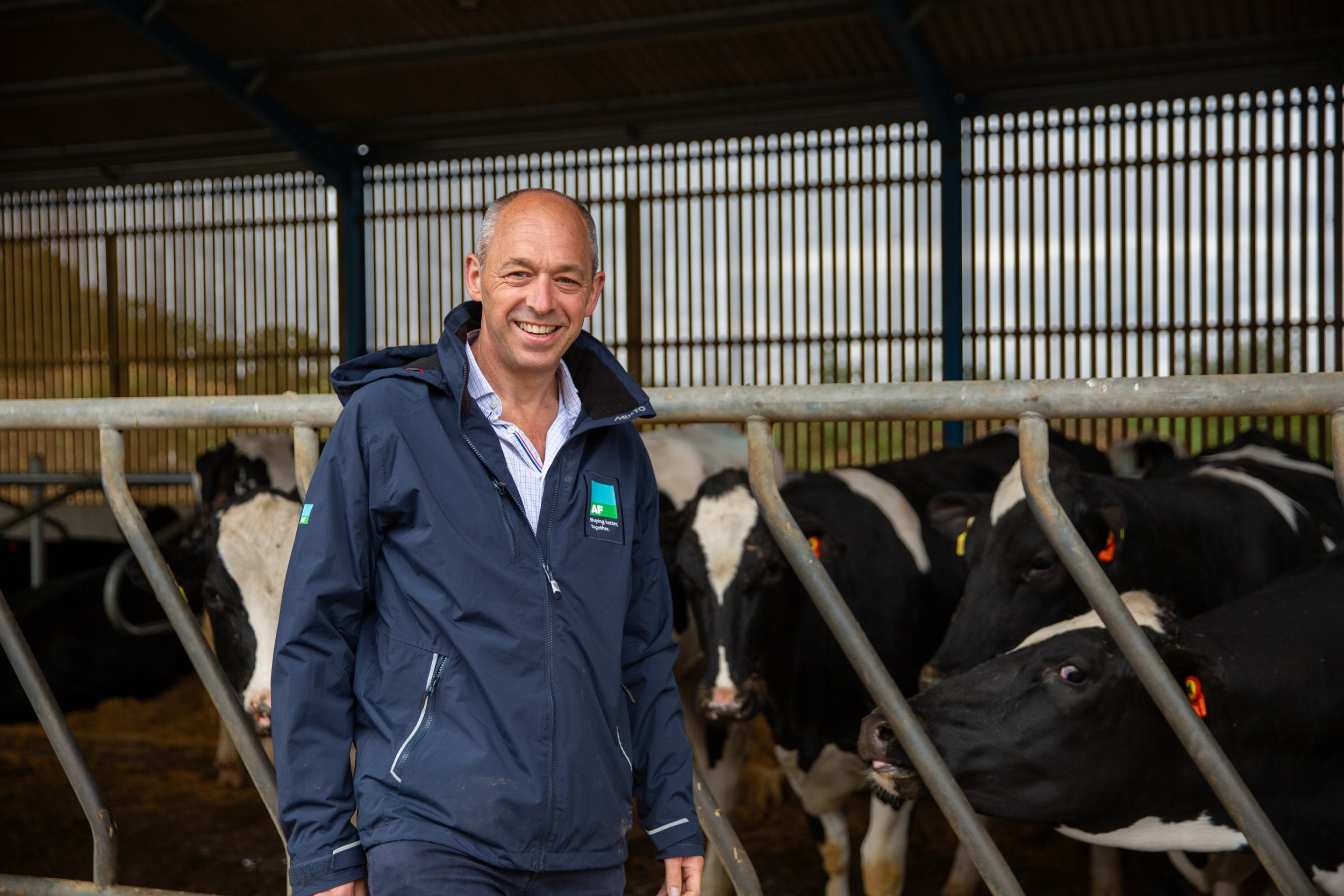
AF Chief Agricultural Officer John Barrett muses on what makes some farmers early adopters, and why being curious, well informed, and willing to test new ideas can be a competitive advantage.
“I’ve always been interested in the farmers who stay one step ahead.
“Not necessarily the biggest businesses, the farmers with the newest machinery, or the greatest appetite for technology. But the ones doing something different.
“Often, they’re some of the most questioning people I meet. They want to see the figures, ask difficult questions, and know who has tried something, what happened, and whether it made a difference.
“So what makes an early adopter? I don’t think it’s simply a greater appetite for risk. I think it’s a willingness to learn and act sooner. Increasingly, I wonder whether that is becoming a competitive advantage in its own right.”
“In farming, some information has a shelf life.
“Knowing that an input market is tightening before you need to buy gives you time to consider your options. Seeing a new technology on farm before investing can save you from an expensive mistake, or stop you missing an opportunity. Understanding how your costs compare with other businesses gives you a chance to do something about them.
“That's the important bit. Knowing something in good time, before you need to act, gives you the opportunity to investigate, compare options, test an idea, and make a decision. Knowing about it when you have to act can leave you with very few options.
“The advantage isn't necessarily knowing more, it's knowing sooner.”
“Farmers are used to making decisions with incomplete information. We never have a perfect view of the weather, markets or what costs will look like six months from now.
“The same applies to new ideas. The most forward-thinking farmers I meet don't expect anyone to guarantee that something will work. Instead, they work out how to get comfortable enough with the uncertainty to test it.
“That might mean trying something on a small area, comparing two inputs, running the numbers, or speaking to another farmer who has already tried it.
“Rather than waiting for uncertainty to disappear, they use evidence and experience to reduce it.
“That approach is reflected in successful on-farm research. AHDB's Strategic Cereal Farms, for example, test research and innovations on commercial farms, sharing results and experience with the wider farming community.
“The point of a trial isn't necessarily to prove an idea right. Sometimes its greatest value is finding out that it isn't right for you.”
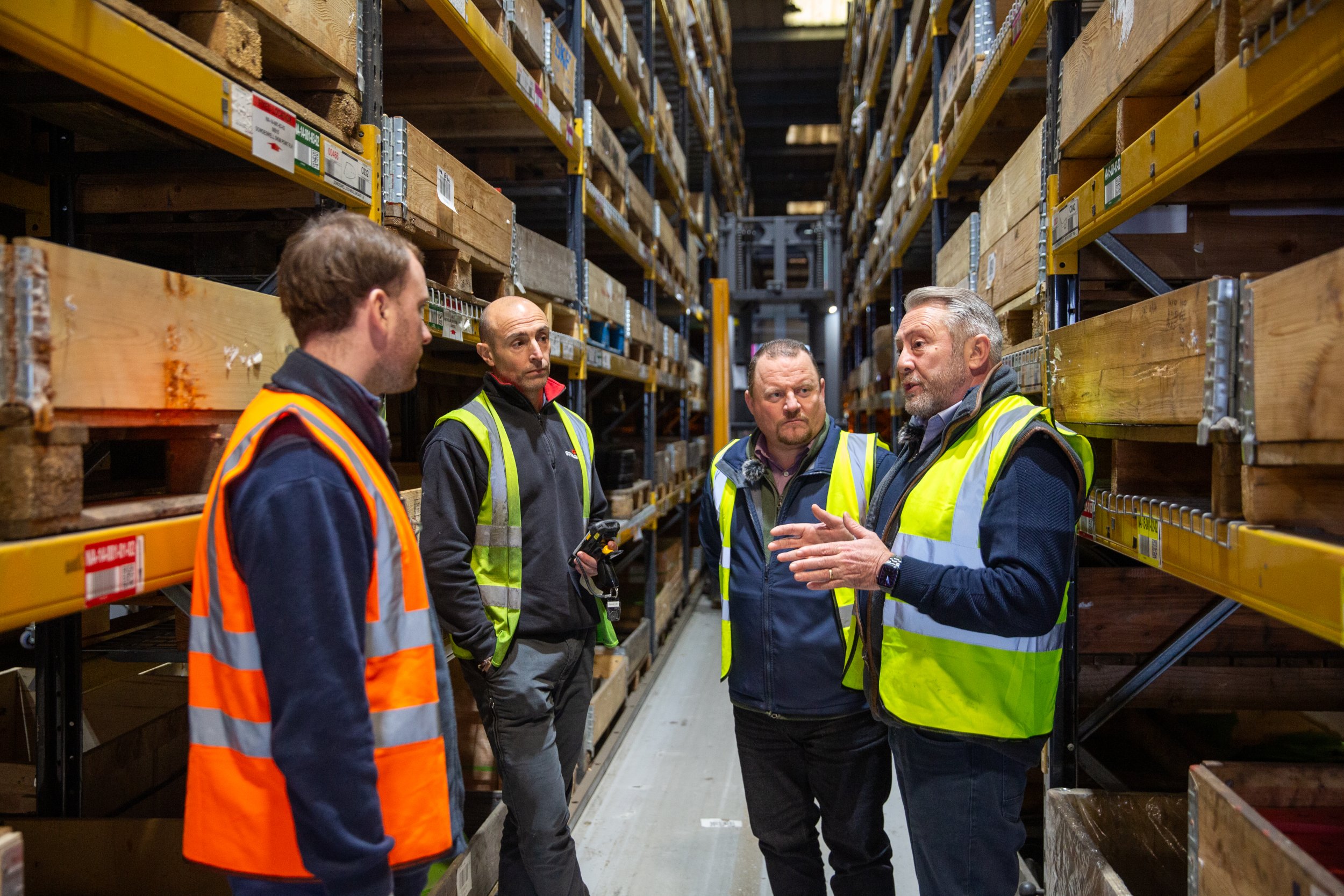
 John Barrett with agronomist Craig Green at the AF maize starter fertiliser trials
“There’s a tendency to think an early adopter is simply the farmer who jumps in first. I'm not convinced that’s true.
“In 2021, AHDB research into UK farmers' learning preferences found that 69% showed a strong preference for a ‘theorist’ learning style, compared with just 22% showing a strong preference for an ‘activist’ style.
“That challenges the stereotype. The farmer who adopts early may not be the ones saying ‘yes’ fastest. But they are the ones asking the best questions, fastest: ‘What problem does this solve? What does the evidence say? What's the return? Who has tried it? Would they do it again?’
“And ultimately ‘Does it make sense for my farm?’. That isn’t resistance to change, but being selective about which changes deserve your time and money.”
“The farmers I see consistently staying ahead tend to be looking beyond today's decisions. They're watching markets, comparing costs, benchmarking performance, talking to other farmers, analysing consumer behaviour, and testing assumptions.
“They're not trying to predict the future. They're trying to be ready to respond to changes. That could mean procuring an input before the market moves, identifying a cost creeping up, or trialling a new crop or different style of animal husbandry before circumstances force a change.
“And that matters because the cost of being late isn't always obvious. You might not make a bad decision - you might simply miss a better one.”
“Another trait I see repeatedly in farming businesses that perform well is a willingness to look honestly at their own numbers.
“AHDB's analysis of top-performing farms in 2024 found that the top 25% of beef and lamb, cereals and oilseeds, and dairy farms typically generated £50,000 - £120,000 more than the bottom 50%. The research identified factors within farmers' control, including business costs, attention to detail and, importantly, attitude to change.
“Its earlier work identified eight characteristics associated with top-performing farms, including comparing yourself with others and gathering information, understanding the market, and having a mindset for change and innovation.
“Baroness Batters’ Farming Profitability Report 2025 echoed these themes, and highlighting strategic management of input costs, benchmarking and understanding the market, financial planning, and strategic decision making as key business skills inherent in consistently top-performing farming businesses.
“So it seems the lesson isn’t that benchmarking magically makes a farm more profitable, but that you can’t improve what you don’t understand.”
“For all the talk about AI, data, and new technology, one of the most valuable sources of intelligence in farming remains other farmers.
“Seeing something working in a real farming environment - and being able to ask the person doing it what they would change - gives context that a brochure or presentation simply can't.
“It’s why we’ve recently created our AF Agronomy WhatsApp group – a place where AF Members can ask questions, exchange ideas, and share knowledge without fear of judgement.
“The number of Members who joined as soon as we launched the group showed me that being well connected isn't just useful - it can give be vital for giving farmers an earlier view of what’s changing within the farming landscape.
“These Member’s aren’t necessarily chasing something new - they're looking for better ways to do things.”
 Events such as farm walks create opportunities for farmers to ask questions and share best practice
“Ultimately, I don't think early adopters are driven by technology. They're driven by improvement. Will making a change reduce a cost, save time, improve output, reduce labour, give better information, make the business more resilient, or give an advantage? They aren't chasing every new trend. They're looking for the next useful thing.
“Most farmers quite rightly spend a lot of time thinking about what needs doing today. But the farmers I see consistently staying ahead seem to make time to think about what might need doing tomorrow.
“Because there’s an important distinction between being wrong and being too late. If you trial something and it doesn't work, you've learned something. If you benchmark your costs and discover an area that needs attention, you have time to act. If you investigate a new technology and decide it isn't right for your business, you've still made a better-informed decision.
“That, to me, is what distinguishes the psychology of an early adopter: being curious enough to look ahead, commercial enough to investigate, connected enough to learn from others, and willing to test an idea before you have to act on it.
“The farmers I admire most aren't necessarily the ones who get every decision right. They're the ones who build businesses capable of making better decisions. The real advantage is having enough information, time, and confidence to act when an opportunity arises.
“And sometimes, the biggest risk isn't adopting too early. It’s learning too late.”
Are you an AF Member who's been trying something different or new? We'd love to hear what you're doing and what gives you the inspiration and confidence to try it.