From abstraction reform and climate change to the cost of building reservoirs, water management is becoming a strategic issue for agricultural businesses. Andrew Spinks, Agricultural Business Consultant at Brown & Co, explores how farmers can improve their resilience, make smarter investments, and work together to secure a more sustainable water future.
"Water is fundamental to farming, but securing a reliable supply at the right time is becoming increasingly challenging.
"Climate change is driving the demand for more irrigation water during the crop growing season, while hot dry summers mean that crops require more water than they might have needed in the past. Growing populations are putting greater pressure on water supplies, and the environment needs more water retained to sustain it through increasingly dry periods.
"On the flip side, extreme rainfall events and flooding are damaging property and infrastructure and disrupting farming operations.
"Our national water management systems were developed in the past so aren’t optimised for our current conditions. As the climate changes and pressure on water resources increases, we need to find better ways to manage water throughout the year.
"For farmers, these competing demands raise important questions. Can your current water supply meet your future needs? Are your abstraction licences still suitable for your business? Could changes to the way you manage water protect your business’s viability or profitability in the years ahead?"
"There are opportunities to start planning now.
"Adapting your existing water management systems will probably require investment, which makes the government’s reopening of the Water Management Grant this autumn welcome news for farmers looking to improve on-farm water management.
"The scheme is anticipated to support reservoir construction, as well as infrastructure to manage water supply and demand for arable and horticultural businesses with irrigation needs.
"However, major projects take time. Planning permission, abstraction licences, engineering, and project development all need to be considered alongside the relevant grant timescales.
"If you're considering a reservoir or other significant water management project, it's worth starting the process early. Understanding what permissions you need, how long they could take, and how these align with the grant timetable can help you avoid missing an opportunity."

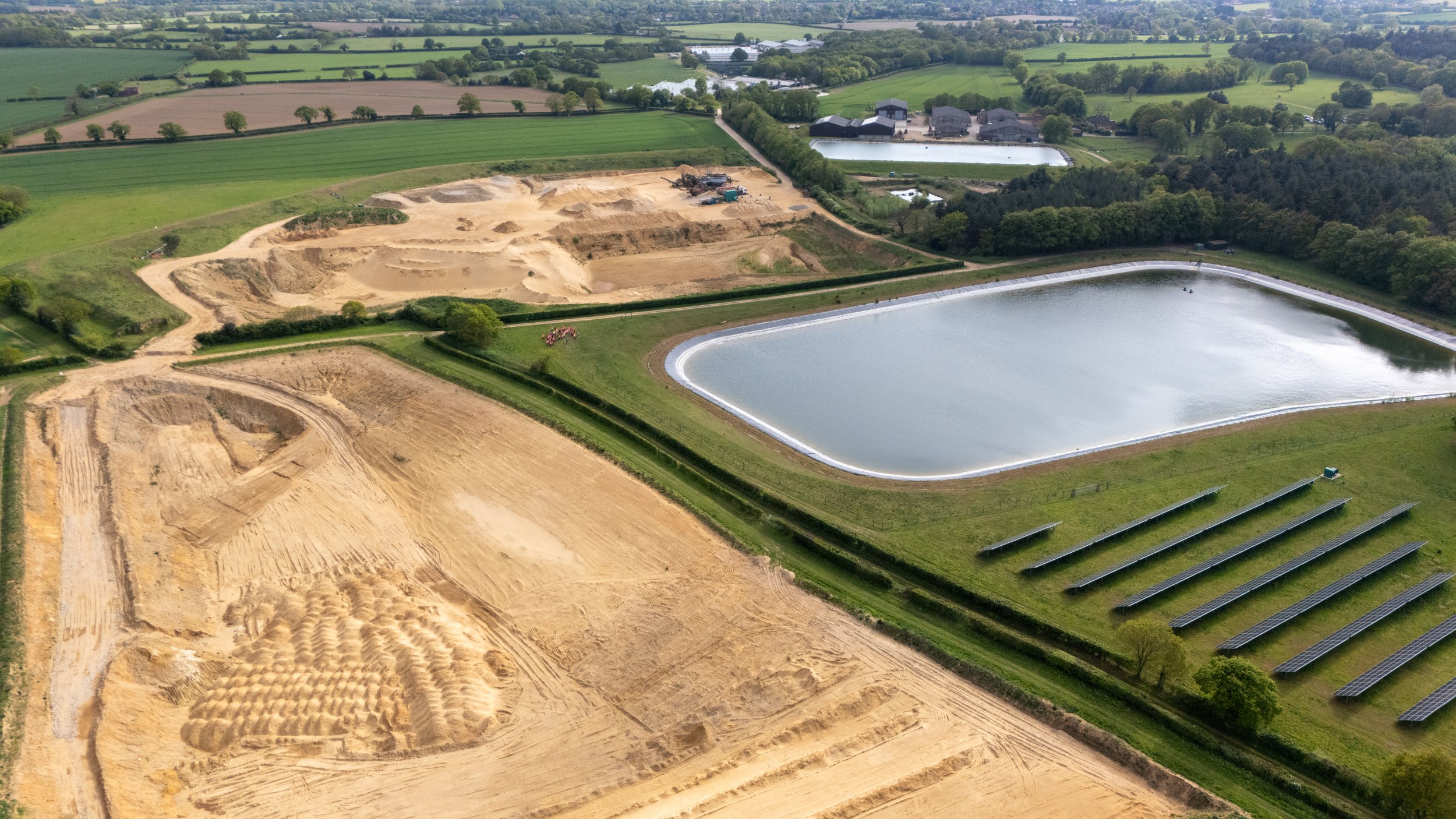
"An average reservoir, including associated infrastructure, needs investment of around £200,000 to £500,000, with payback potentially measured in decades. That makes it essential to consider the economics carefully, especially as payback depends on the profit you’re attaining from the crops you’re growing.
"So, careful thought needs to be given to how you’re using water. And it’s an excellent reason to consider collaboration. For example, if your rotation periodically dictates a year with lower demand for water, consider if you can attain value for it by meeting a shortfall that your neighbour has. For example, for their high value salad crop, rather than using it to generate slightly more cereal yield.
"I can’t help but think that local water systems based on this premise, i.e. efficient systems which get water to where it’s needed most in the locality, would be good for farming. And attributing a financial value to our water resource helps us to optimise its use.
"A reservoir may be the right solution for some businesses, but it should not necessarily be the first one considered.
"According to the Natural Resources Defence Council, regenerative agriculture holds an additional 20,000 gallons of water for every 1% more organic matter in the soil and reduces the likelihood of flooding. So, look for opportunities to improve soil management, refine irrigation practices or adapt your wider farming system to reduce demand and make better use of available resources.
"These improvements may not be as eye-catching as a new reservoir, but they can be an important first step.
"Water professionals typically look at managing demand before seeking additional supplies. Agriculture needs to take a similar approach. To have a credible conversation with other water users, we need to demonstrate that we’re using our existing resources efficiently as well as considering how to secure more."

"Water management does not have to be tackled farm by farm. In some circumstances, working collaboratively with neighbours could create opportunities that would be difficult or uneconomic to achieve individually.
"Collaboration could open up a wider range of potential water sources, improve the efficiency of water use, and help spread the cost of suitable infrastructure. It can also encourage farmers to look beyond their own boundaries and consider how water resources might be managed more effectively across a local area.
"I’m currently completing three Local Resource Opportunity (LRO) Studies for the Environment Agency, near Nocton in Lincolnshire, Buckfastleigh in Devon, and on the Isle of Purbeck in Dorset. These studies bring small groups of neighbouring farmers together to explore how they can improve their long-term water resilience. This includes looking at local resources, understanding demand, and considering opportunities to improve how water is sourced and used.
"Importantly, the thinking extends beyond agriculture. Farms operate within a wider landscape, so taking a broader view of potential water sources and competing demands can help identify opportunities that might otherwise be missed.
"Collaboration may also strengthen some grant applications, depending on the scheme's assessment criteria."
"Water management is not just an issue for farms growing irrigated crops. Livestock businesses also depend on a reliable supply, often in substantial quantities.
"Water supply difficulties experienced in parts of Kent this summer, when household taps ran dry and bottled water had to be delivered, highlighted how disruptive a loss of mains water can be.
"Whilst this is an extreme example, for livestock farmers a disruption to water supply can quickly become a serious operational concern - livestock drink a lot of water. Reviewing water sources, storage capacity, infrastructure and contingency arrangements are all imperative for adapting to a more challenging future."
"Every farming business has different needs, but the principle is the same: understand your exposure, identify potential weaknesses, and consider what you can do now to reduce the risk of problems later."
"Water management may feel like another demand on an already lengthy farming to-do list. However, leaving it until a shortage or regulatory change forces action could mean facing difficult decisions with limited time and fewer options.
"Building water resilience starts with understanding what your business needs, what resources are available, and how you can make the best use of both. A reservoir may ultimately be part of the answer, but it should be considered within a wider strategy that balances supply, demand, cost and long-term value.
"Taking action now can help put your farm in a stronger position to adapt to a changing climate, manage future risks, and make more informed investment decisions.
"At Brown & Co, we work with a number of reservoir engineers and planners to guide farmers through the process, helping them explore the options and understand what may be required to take a project forward. If you think we might be able to help your business, get in touch."
Andrew Spinks, Agricultural Business Consultant, Brown & Co
 Andrew Spinks, Agricultural Business Consultant, Brown & Co