UK agriculture is operating in a fundamentally different pricing environment. Input costs – such as fuel, fertiliser and energy - are no longer moving in predictable cycles. Instead, they react quickly to geopolitical events, supply chain pressures and shifts in global energy markets.
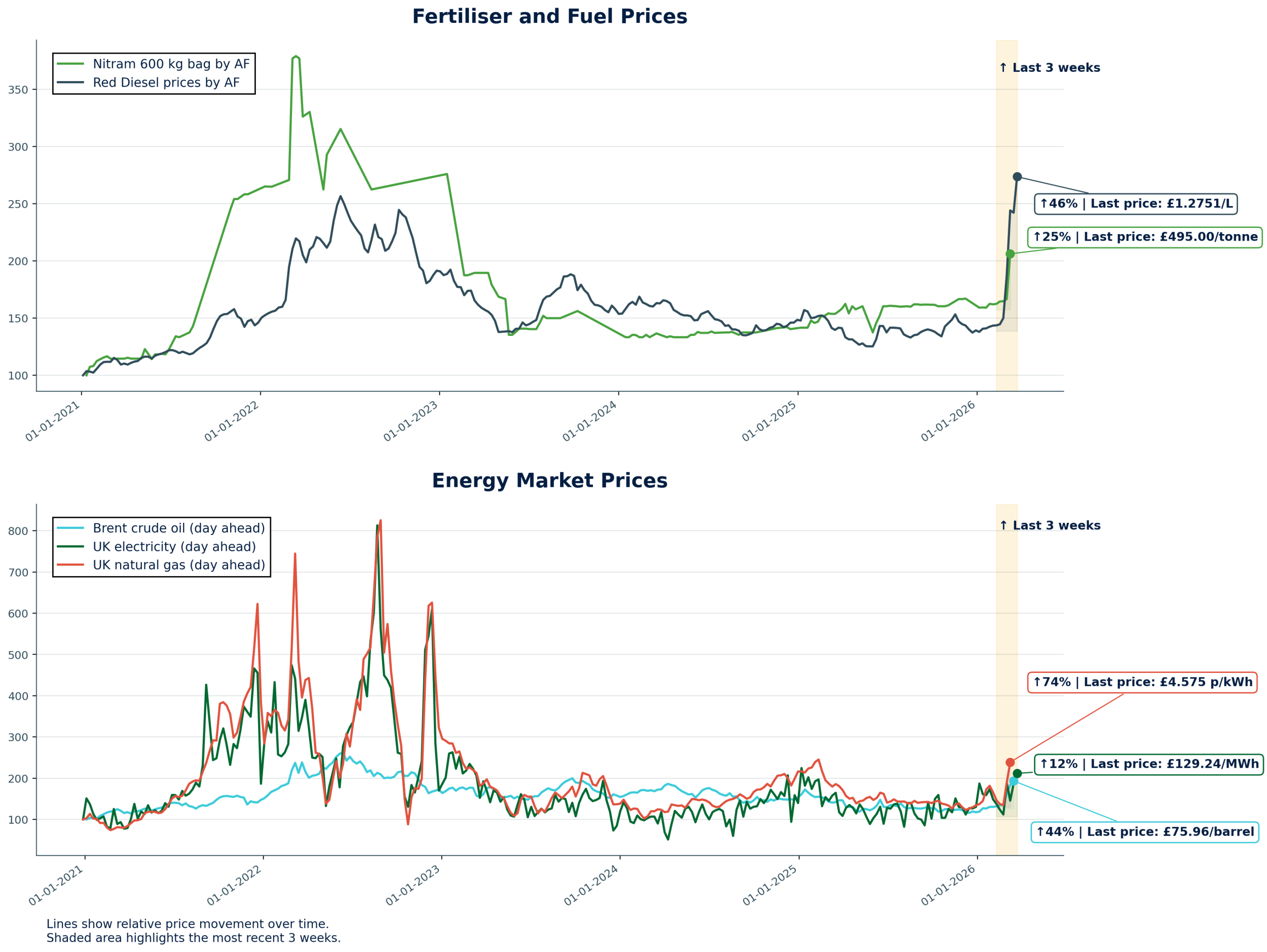
As shown in our annual AgInflation Index, these movements can be extreme. Wholesale gas prices have peaked at £515/MWh, fertiliser prices have risen by over 170%, and fuel prices have swung sharply in a matter of weeks as you can see in our graph below.
 Volatility isn’t a short-term challenge. It’s now a permanent feature of the landscape - and our advice to farm businesses is to plan accordingly.
Recent disruption has also shown that securing supply can be just as critical as securing a good price. Shortages and logistical constraints have left some businesses unable to access key inputs when they need them.
Price spikes can happen quickly – as we’ve seen in recent weeks - but so can supply constraints. Procurement strategies therefore need to go beyond price tracking. Building resilience means planning ahead, strengthening supplier relationships and making earlier purchasing decisions to reduce exposure to shocks.
Input markets can shift rapidly, with significant price movements happening in weeks -not months. For example, the escalation of tension in the Middle East has resulted in:
red diesel rising from ~70.5ppl to 115ppl in just three weeks
white diesel increasing from ~113ppl to 160ppl
fertiliser prices climbing by around 27%.
Energy and fertiliser costs in particular remain closely tied to international dynamics, making them more unpredictable than ever.
For farm businesses, this marks a clear shift: inputs should no longer be treated as routine purchases, but as strategic decisions that directly impact margins. The implication is clear - reactive buying is no longer the best way forward.
The past five years point to a clear trend: price volatility is becoming more frequent, more severe, and more unpredictable.
In response, we’re hearing that many farmers are shifting their approach towards:
better forward planning
active risk management
more structured procurement.
The goal is no longer to chase the lowest price, but to protect margins and build resilience.
To us at AF, the “best” price means more than simply securing the lowest cost for a single product. It’s about taking a holistic view of the market - identifying opportunities to add value and drive your farm business forward.
Fixed forward pricing (FFP) contracts allow you to lock in prices for future fuel purchases, providing:
price certainty for budgeting
protection from market spikes
improved margin stability.
Some AF Members with FFP contracts have secured fuel up to 40ppl below spot prices. But fixing 100% of usage reduces flexibility. A balanced approach - locking in a proportion at your target price - is more effective.
Markets can move on a single headline. Rather than purchasing reactively on a ‘just-in-time’ basis chasing the lowest possible price, focus on buying at a price that works for your business - your “magic number”.
This shifts decision-making from reactive to strategic.
Use contract frameworks that offer flexibility so purchasing can be spread over time whilst providing price certainty by the start of the contract. AF’s electricity portfolio is an example of this type of contract.
It’s set up to allow AF to purchase power in increments on several occasions through the year, ensuring it’s all bought before the contract starts to offer Members a fixed price. The next step? We’re working on offering a two-year contract with a fixed wholesale electricity contract element. We hope to share more news on that with you soon!
Ensure that the factors you’re considering when making procurement decisions are what makes a difference to your bottom line.
Wholesale electricity often gets the most attention - but it’s only around 40% of the total bill. Fixed costs, such as capacity, can have a significant impact.
AF’s Utilities Team has successfully reduced fixed costs for Members by recommending changes they can make to their energy supplies.
Mitigate risk by ordering early and leveraging the volume of other farmers looking to buy the same inputs at the same time.
For example, early ordering and pooling are tools that AF Fertiliser Procurement Manager Mark Southwell uses to negotiate best price to reduce your business’s exposure to market volatility. Benefits include:
unlock better pricing
improve access to supply
reduce exposure to peak markets.
Buying ahead, rather than “just in time”, puts you in control and lowers risk.
Stable input costs cannot be assumed in today’s farming landscape. The farms that succeed will be those that:
actively manage risk
adopt structured procurement strategies
stay adaptable in changing markets.
Relying on spot purchasing for key input purchases is increasingly risky. A more strategic approach won’t eliminate volatility but it will help protect margins and strengthen long-term business resilience.
If you want to take a more strategic approach to managing input costs, your AF Team is here to help. Get in touch to discuss your procurement strategy and how to build resilience into your business.