How would your business be affected by the predicted £810 million loss of farm income in the wake of dynamic alignment? Will it help you trade more easily with the EU, or will the playing field remain skewed? AF Crop Protection Procurement Manager Alfie Jackson examines what the upcoming SPS legislation may mean for the food and farming sector.
“It’s an arrangement whereby the UK agrees to permanently match EU laws and regulatory standards in specific sectors to facilitate or improve trade.
“The Sanitary and Phytosanitary Regulations (or SPS) targeted by dynamic alignment as currently in discussion, will cover the trade and movement of plants, plant products, animals, animal products, feed and food.
“To trade within the EU currently, everything must be inspected and approved before crossing the border. This creates a significant number of barriers.
“SPS purportedly aims to remove many of these barriers, thus improving the flow of EU imports and exports with the UK. But the implications of the agreement for farming are far-reaching and may not be entirely positive.”
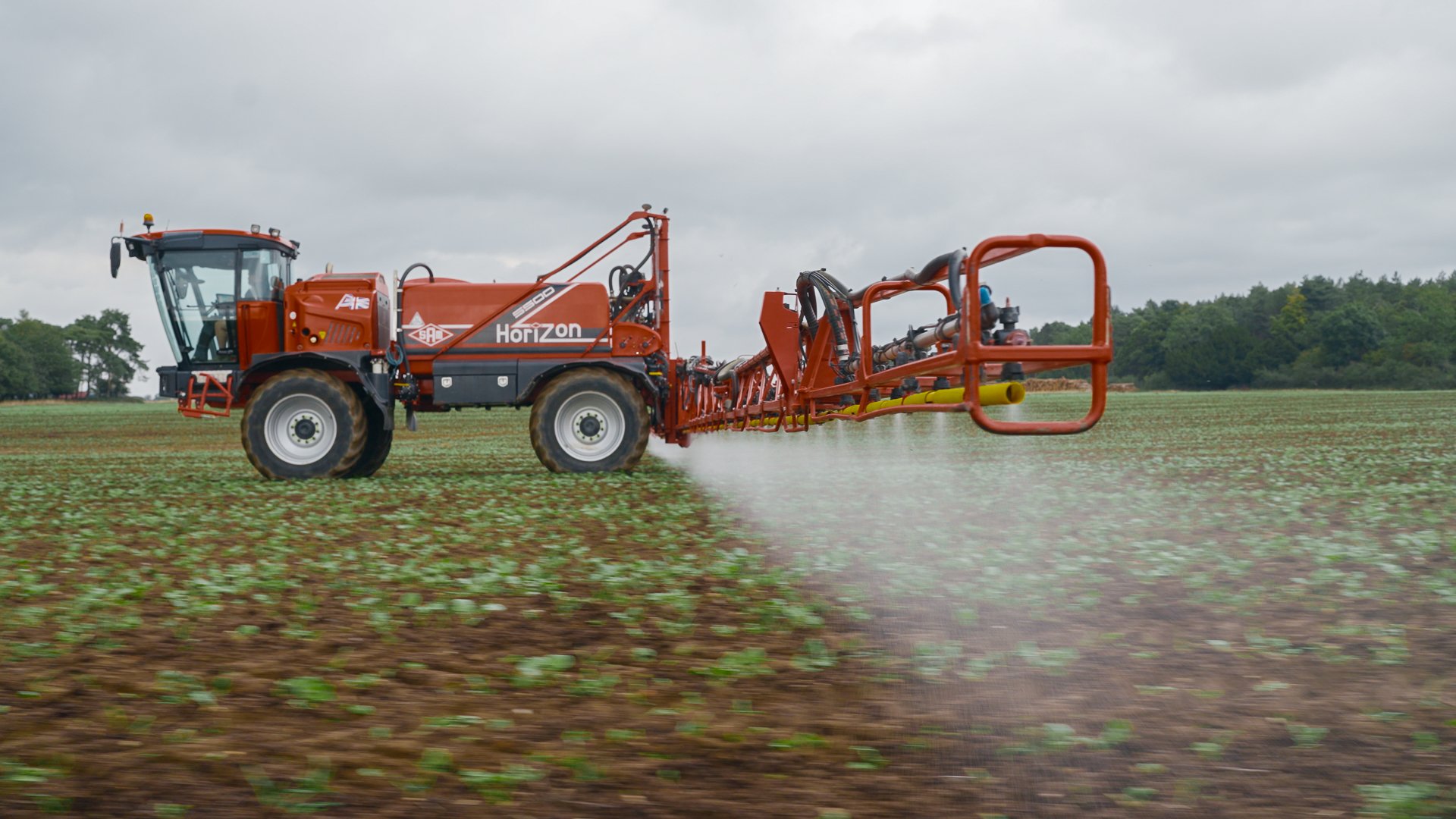
“Crop protection products are one of the most affected but least talked about areas.
"UK crop protection product approval and regulation is currently carried out by the Chemicals Regulation Division (CRD), part of the Health & Safety Executive. Until the UK left the EU, CRD was the shining light of the EU’s chemical testing and approval process. Post-Brexit, CRD has continued to be far more efficient than its EU counterparts, so UK farmers and growers benefit from a lot of chemistry not currently approved in Europe.
“Products such as Miravis, Vimoy, and Luxinum are all approved in the UK but not the EU. They’re commonly used, popular herbicides for control of, amongst other things, blackgrass, and septoria.
“An additional challenge is that post-Brexit, some products still used in the UK were banned in the EU, for example flufenacet and metribuzin - key components of blackgrass control.”

“What will happen if (or when) dynamic alignment takes effect? Nobody knows.
“There was due to be a discussion between the EU and the Cabinet Office in July, but as Keir Starmer was a driving force behind the change, his departure as UK prime minister necessitated its delay.
“In my opinion, Andy Burnham is closely politically aligned to Starmer, so I can’t see SPS not proceeding. The meeting is now scheduled to take place in November, and I think we'll see one of three outcomes for crop protection products currently banned in the EU.
“Option 1: an immediate ban on the sale and use of unauthorised products with immediate effect from the date SPS comes into force.
“Option 2: a six-month sell-through and use-up period for products not currently authorised in the EU. If SPS comes into force in July ’27, this could mean next autumn would be the last application period.
“Or option 3: a twelve-month sell-through and use-up period, allowing use through the following spring (2028).
“My gut feeling is that option 2 is most likely, which would mean no more use of products banned in the EU after next autumn. That’s a bleak picture for many key crop protection products.”
“For products approved in the UK post-Brexit, but still going through the much slower EU approval process, the picture is even less clear!
“We’ve never been in this position before, and at this stage I can only hope that use of any such products is allowed to continue until the outcome of the EU approval process.
“Unfortunately, I suspect it’s more likely that they will say that products not approved in the EU, cannot be used regardless of UK approval.
“A good example is Vimoy – approved for use in the UK by CRD in 2023, it’s status in the EU is still ‘pending’ with an anticipated approval date of 2029.
“Other key products at risk of being lost include phenmedipham, a key post-emergence herbicide for sugar beet, which is likely to lose its EU approval within a year.
"We’ve also seen changes to the approved use of glyphosate in the EU, removing authorisation for its use as a pre-harvest desiccant. Anecdotally, and perhaps unsurprisingly, we’ve heard that European farmers have encountered a surprising increase in weeds appearing in their wheat in the weeks before harvest!”

“Manufacturers have been working to develop new, alternative products with approved chemistry. But to put this into context on farm, where flufenacet cost £9 or £10 per hectare, the new options are looking more like £49 per hectare.
“In a farming landscape that has lost subsidy support, compared to its EU cousins for whom subsidies continue to be available, the future for UK crop protection products is not a positive one.
“That lack of subsidies ironically impacts the overall efficacy of SPS for crop exports. In global markets such as wheat, where EU farmers might be selling at £190 per tonne, a subsidy of around £20 a tonne means their income equates to £210 per tonne. UK farmers are still selling their wheat for £190 per tonne with no subsidy top-up. So in reality, how appealing is trade with the EU?
"A January 2026 study commissioned by industry body CropLife UK anticipates that lost income from UK farming in the first year alone could add up to £810 million. That figure is based on reduced yield (wheat volume could drop by 9-16%, potatoes by 4-6%, and apples by 3-7%) following loss of key crop protection products, shifts in cropping patterns, and increased costs associated with growing certain crops.
“All of this is conjecture, based on my experience and gut instincts.
“But I'm hearing rumours on the grapevine that some manufacturers have slowed, or even stopped, their UK research and development pipelines. Because who wants to spend millions of pounds developing a UK product and getting CRD approval, only for it to be revoked by the EU next year?
“Sadly, that comes at exactly the time when we need new products coming to market, to replace with like-for-like efficacy some of the key products we’re likely to lose. Are we likely to see these replacements? If we do, it may not be for some years due to the lengthy EU approval process.”

“So, what’s the answer? Unfortunately, there isn’t a clear or simple one.
“I’d estimate only around 5% of farmers and growers are really taking SPS into consideration when planning their future crop protection requirements, mainly because the future is so unclear.
“But when it happens, it’s likely to happen fast, so it’s vital to start thinking about your buying strategy in each of the three scenarios.
“Some Members have talked about stocking up in the hope that there will be a decent phase-out period. But that could leave them exposed to significant disposal costs if they’re left with product they’re not able to use after SPS comes into force. Or risk using it unlawfully, which we do not recommend.
“Others have mentioned leaving decisions about products likely to be banned until they know the lie of the land. But that exposes you to the risk of severely increased prices if demand increases dramatically ahead of a ban – just as we saw with flufenacet in 2025, which went up fourfold.
“We’re estimating suppliers will take around 70% of their usual forecast stock requirements, to mitigate the risk that they will be left with significant disposal costs in the event of a swift ban. So availability is something we'll monitor closely.
“Right now, there’s no correct answer as the future is so unclear. But we hope for clarity later this year and we’ll continue to keep you informed as more information becomes available.”
"The impact of dynamic alignment doesn't stop at crop protection products. In their guidance, Defra cites that the changes are much wider reaching, affecting everything from livestock movement reporting to timber products and jam.
"Their advice for now is that, whilst no clear outline of the changes has yet been agreed, all potentially affected businesses are "encouraged to continue engaging with the process to be ready by mid-2027."
"Some of the changes bring more positive news. For example, UK plant passports will be replaced by EU plant passports. The Horticultural Trades Association seems confident that the similarity between the two systems means this should be a straightforward change and help trade flow between UK and EU.
"Rules relating to food labelling and organics may change, with updated labelling requirements expected, such as ensuring the EU organic logo and EU statement of agricultural origin are included.
"Interestingly, Defra notes some changes will be required to the composition of certain products, for example minimum levels of fruit in jams potentially increasing by almost 30% in line with EU "Breakfast Directive" standards. This could level the playing field for consumers in terms of product choice but have a knock-on effect for growers and producers."
"Livestock farmers and keepers will be affected, from horses to poultry. Traceability, record keeping and reporting are all listed, but the nature or extent of the changes has yet to be clarified.
"Great Britain's feed additive authorisations will no longer apply, and have diverged from the EU authorisations since Brexit, so there will be changes for producers and manufacturers of feed. And if you use animal feed? Defra advises you'll need to check if you need to change the products you use to comply with EU rules once the SPS comes into force.
"Additional changes may include identification marks applied to products of animal origin, including meat and dairy, sell-by dates for eggs, and new requirements for example relating to temperature control and dry ageing of meat."

"What are the next steps?
"Whilst the final agreement may be a few months away, it's clear that the effects of SPS will be far-reaching. And whilst there may be some positive outcomes from the changes, undoubtedly there will be much work to do in preparation.
"Unfortunately, ignoring dynamic alignment isn't the way forward. My advice is to start considering how it might affect your business, and start talking about it ... with your peers, with industry professionals, and anyone else relevant. You can sign up for email alerts on the Defra website and join their SPS readiness mailing list for their latest updates.
"I'm expecting more information (and misinformation) to start appearing after the November meeting. As soon as we have any definitive details about the impact on procurement of key inputs such as crop protection products, we'll share them with you. But if you're concerned about how to manage the inevitable changes that will be required to your crop protection programme, just give me a call and we can start to make plans."
If you’d like to talk through what dynamic alignment could mean for your arable or horticultural operation, or to start planning ahead for the possible scenarios, get in touch with Crop Protection Procurement Manager Alfie Jackson.